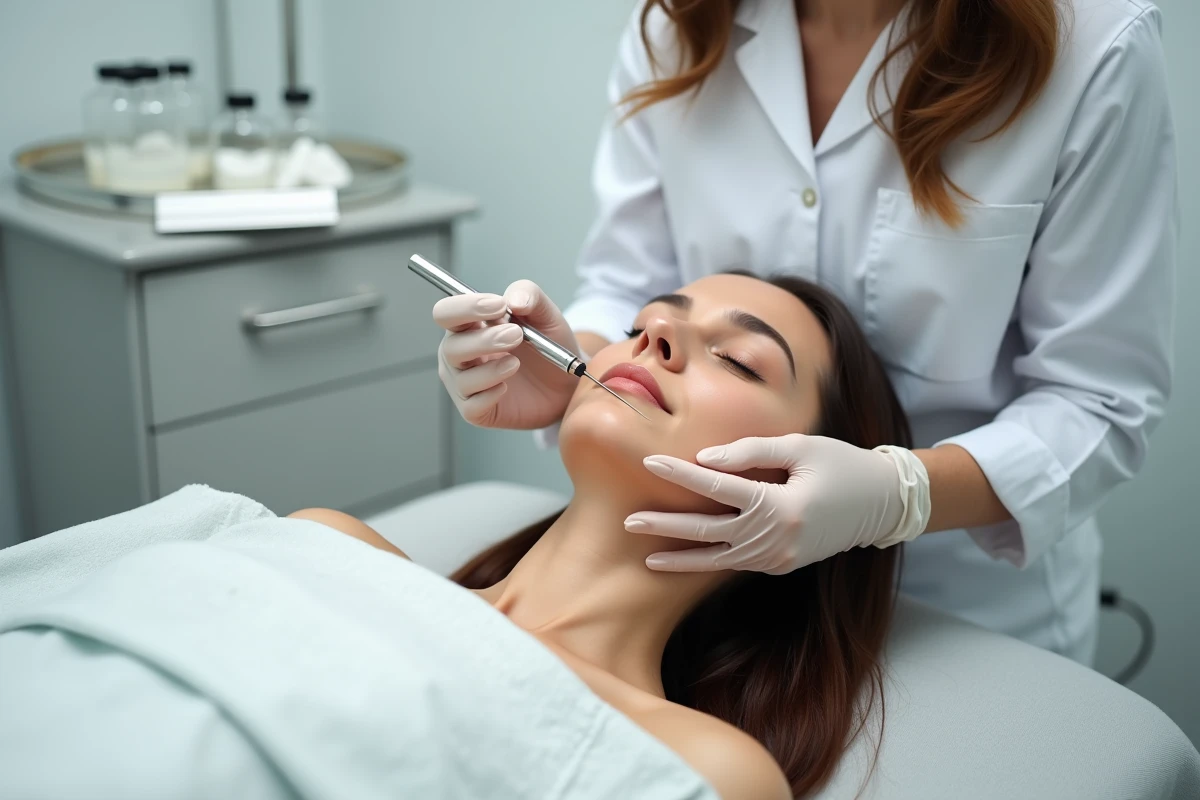
Galvanic electrolysis remains the only technique capable of destroying a hair follicle through a chemical reaction, producing caustic soda (sodium hydroxide) upon contact with the dermal papilla. This specificity distinguishes it from thermolysis, which acts through heat, and blend, which combines both currents.
On the face, where hairs often have a fine caliber and superficial implantation, the choice between pure galvanic mode or blend directly influences the rate of permanent destruction per session.
Galvanic electrolysis, thermolysis, and blend: which current for the face
Thermolysis (high-frequency current) heats the tissue around the follicle in a fraction of a second. It is suitable for well-anchored terminal hairs, but on very fine facial down, the risk of treating next to the follicle increases. Galvanic electrolysis produces a chemical agent that diffuses throughout the follicle, including in slightly curved follicles, which are common on the upper lip and chin.
The blend combines both currents simultaneously. We observe that in areas of the face with a high follicular density (cheeks, jawline), the blend offers an interesting compromise: the heat accelerates the chemical reaction, reducing the application time per hair without sacrificing effectiveness on deformed follicles.
The choice of current also depends on skin reactivity. On skin prone to post-inflammatory hyperpigmentation, pure galvanic, applied with moderate intensity over a longer duration, causes less edema than a thermolytic flash. This is a parameter that the practitioner adjusts hair by hair, which explains why facial electrolysis hair removal requires an operator trained in assessing the caliber and angle of implantation of each hair.
Integration of electrolysis into a hormonal and post-laser journey
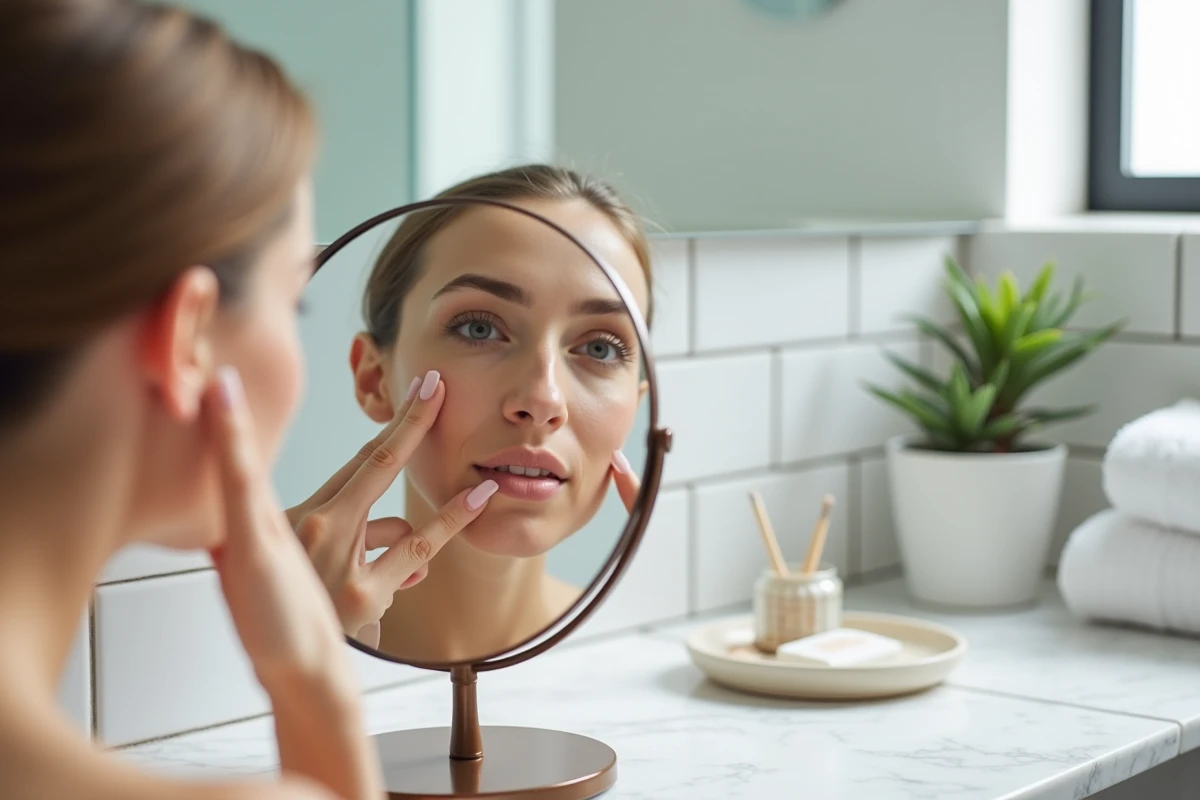
Treating facial hair through electrolysis without investigating their hormonal origin is like emptying a basin that continuously fills up. In women with polycystic ovary syndrome (PCOS), the French Dermatology Society explicitly cites electrolysis as the reference method for hairs not accessible to laser (light, red, very fine hairs).
Hormonal assessment before treatment
An assessment including free testosterone, DHEA-S, and 17-hydroxyprogesterone helps identify hyperandrogenism. As long as the hormonal imbalance is not stabilized by appropriate medical treatment, new follicles may activate under androgenic stimulation, generating regrowth that the patient mistakenly attributes to a failure of electrolysis.
Electrolysis only destroys follicles that are already active at the time of the session. It cannot do anything against a still dormant follicle that will be recruited three months later by a hormonal spike. Hair removal treatment and endocrine treatment work in parallel, not in sequence.
Paradoxical regrowth post-laser on the face
Paradoxical regrowth, documented mainly in hormonally dependent areas of the face, manifests as the appearance of terminal hairs in an area where the laser has stimulated vellus follicles instead of destroying them. This phenomenon more often affects darker phototypes and the peripheral areas of laser treatment (jawline, cheeks).
Electrolysis then becomes the logical catch-up solution:
- It targets each hair individually, without depending on the melanin/skin contrast, making it effective on paradoxical hairs regardless of their color.
- It does not risk stimulating neighboring follicles, unlike a new laser attempt on the same area.
- Sessions should be spaced according to the hair cycle of the treated area, generally every three to six weeks on the face, to intercept hairs in the anagen phase.
Session fractionation and long-term results on the face
Specialized centers in facial electrolysis now favor shorter but more frequent sessions, particularly on the upper lip and eyebrows. This fractional approach limits cumulative inflammation in the same area during a prolonged single session.
On the upper lip, a session of fifteen to twenty minutes allows for the complete treatment of the area without causing excessive edema that would compromise healing. Fractionation reduces the risk of micro-scars and improves comfort, two determining factors for treatment adherence over time.
What patients report over several years
Testimonials collected by thermolysis and electrolysis centers show a recurring pattern: a visible reduction in hair density from the first months, followed by a plateau where sessions gradually space out. The total duration of treatment varies significantly depending on the hormonal origin of the hairiness.
In patients whose PCOS is medically stabilized, results tend toward near-permanent hair removal after one to two years of regular sessions. In the absence of hormonal treatment, new follicles can activate indefinitely, turning electrolysis into a maintenance treatment rather than a definitive solution. We recommend establishing this framework from the first consultation to adjust expectations.
Criteria for choosing a facial electrolysis practitioner
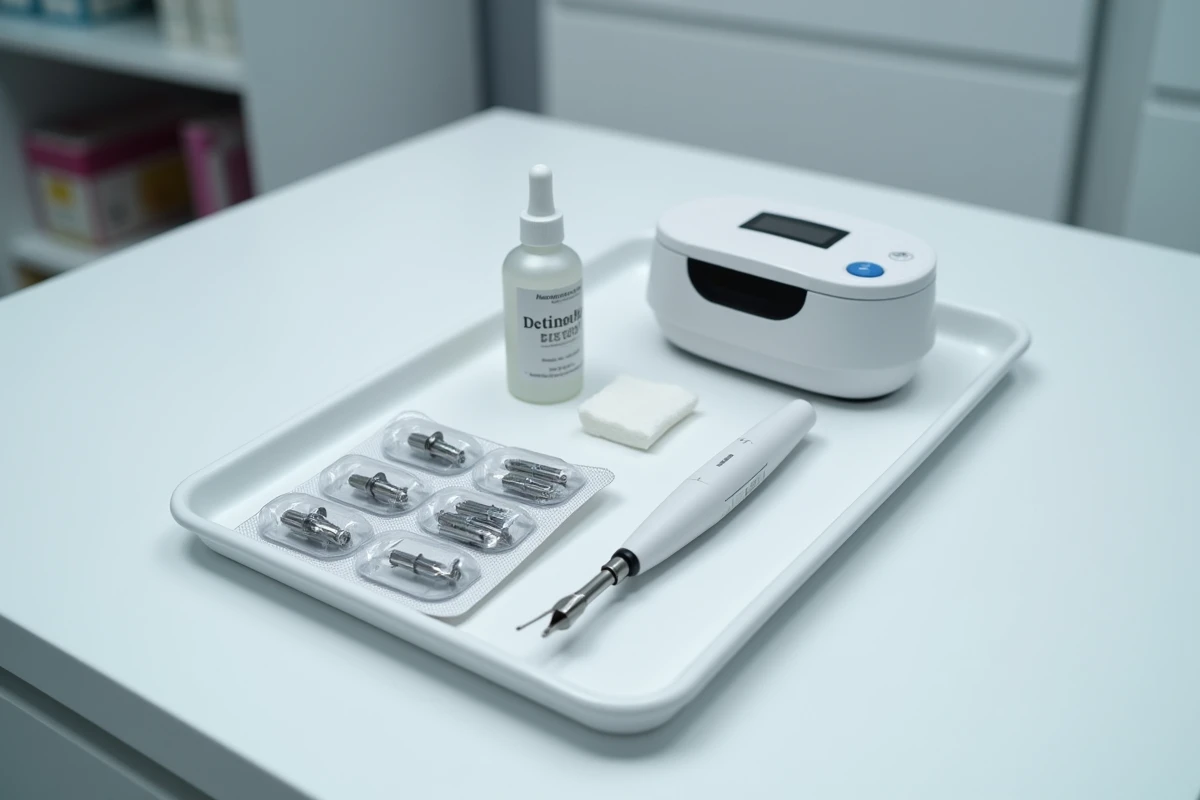
The SFD emphasizes the necessity of a trained operator to limit scarring on the face. This point deserves to be detailed, as the technique requires mastery that goes beyond simple manipulation of the device.
- The calibration of the current intensity (in milliamperes for galvanic, in frequency units for thermolysis) must be adapted to each area of the face, with the skin of the chin tolerating higher intensities than that of the upper lip.
- The insertion of the probe into the follicle requires sub-millimeter precision. An incorrect angle causes increased pain and incomplete destruction, necessitating retreatment of the same hair.
- The practitioner must be able to visually identify a hair in the anagen phase (visible epithelial sheath, pigmented bulb) to avoid treating hairs in the catagen or telogen phases, whose destruction would be ineffective.
A well-conducted facial electrolysis treatment remains the most reliable method for hairs that the laser cannot reach. The condition: a prior hormonal assessment, a practitioner capable of adapting their technique hair by hair, and an informed patient that the duration of the journey depends as much on endocrine balance as on the operator’s competence.