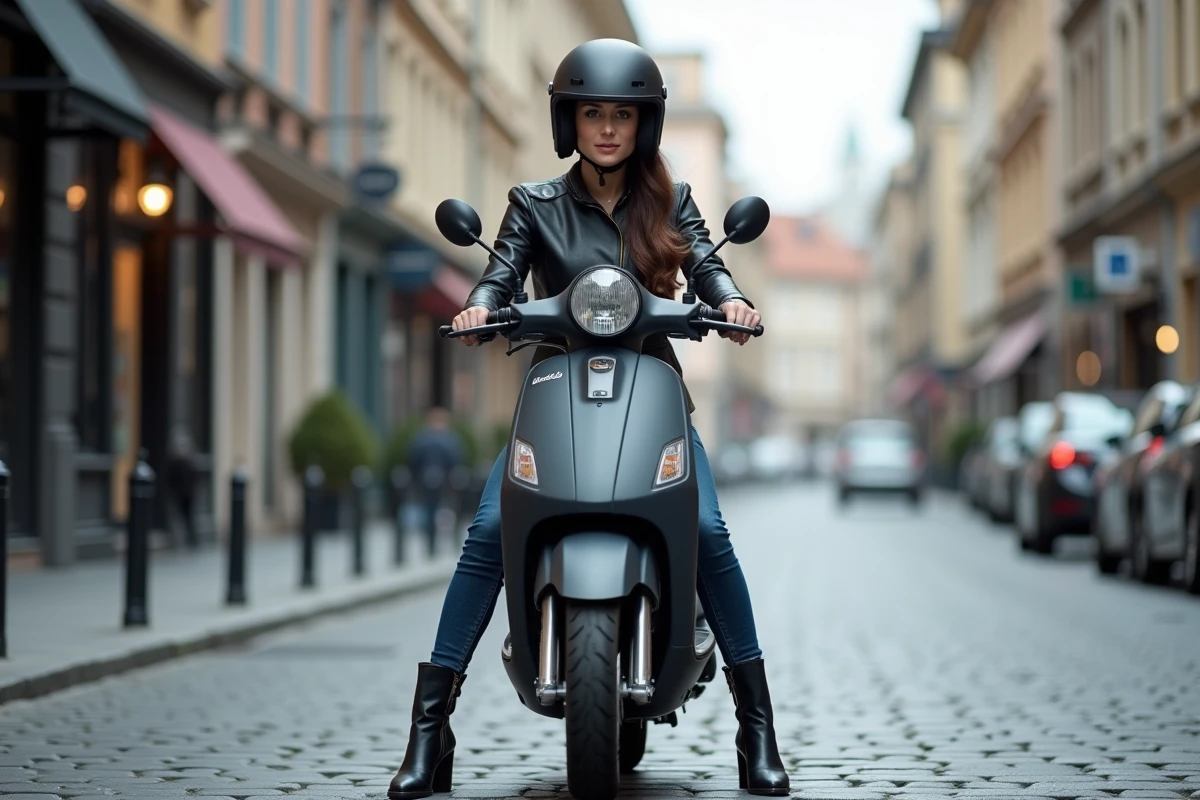
Placing both feet flat at a red light changes everything in terms of confidence when riding a maxi scooter. When you are under 1.70 m tall, some models can become quite intimidating, not because of the engine, but because of the seat geometry and the weight in running order.
Three technical parameters affect the comfort of a smaller rider: seat height, the width of the seat at its narrowest point, and the center of gravity of the two-wheeler.
Center of gravity and seat shape: the criteria that the technical sheet does not show
Most comparisons simply list seat heights in millimeters. A maxi scooter listed at 780 mm can actually feel less reassuring than a model rated at 800 mm. Why this paradox?
Because the shape of the seat matters as much as its raw height. A narrow front seat allows for better leg descent to the ground. The pelvis naturally slides, and the foot can rest flat without contortion. Conversely, a wide and flat seat keeps the thighs apart and prevents a firm touch with the ground.
The center of gravity plays a comparable role. A maxi scooter with mass concentrated at the bottom of the chassis remains more stable when stopped and during parking maneuvers. At low speeds, this is precisely where a smaller rider feels the most discomfort. A heavy model with a low center of gravity will recover more easily than a lightweight scooter with a high center of gravity.
Before comparing the specifications, it is better to know which maxi scooter to choose for a small frame by taking these often-missing parameters into account.
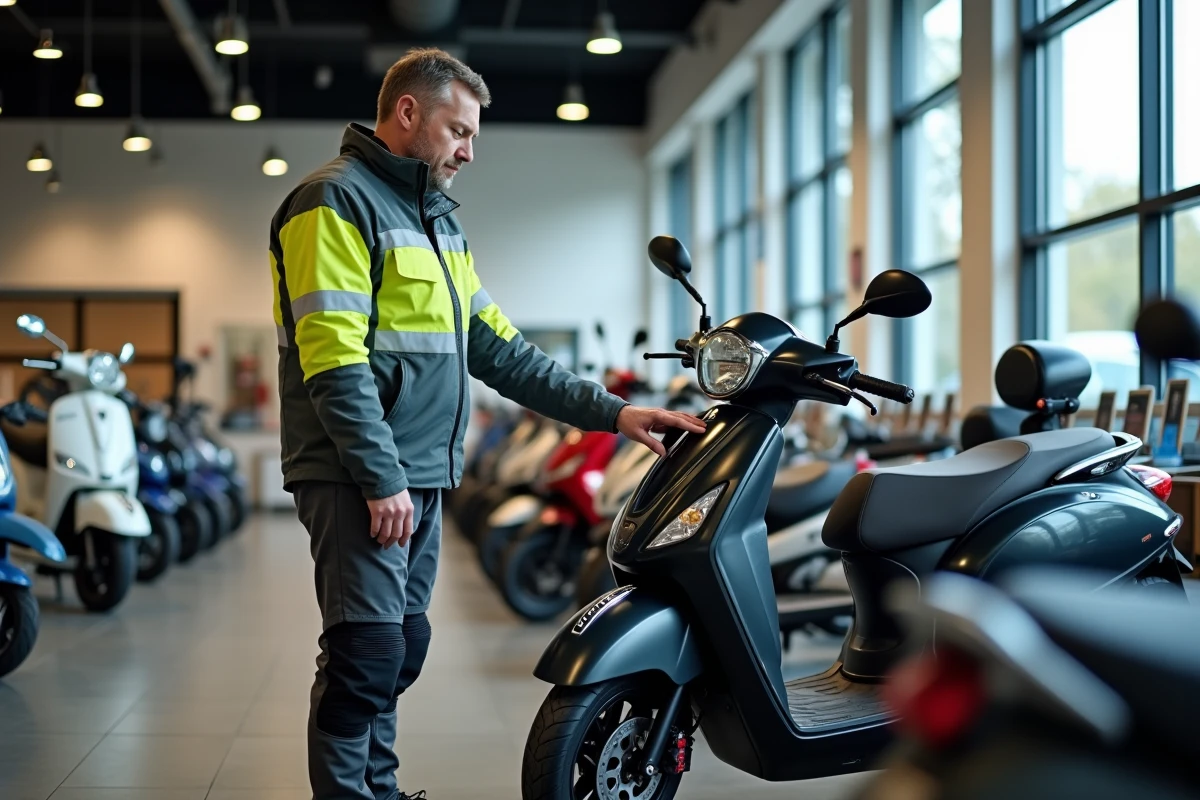
Seat height under 800 mm: maxi scooters that make life easier
Not all maxi scooters are created equal for a smaller rider. Some models stand out due to ergonomics designed from the outset.
Yamaha TMAX
The Yamaha TMAX consistently comes up in feedback from smaller riders. Its seat, relatively narrow at the front, facilitates ground contact. The engine-transmission assembly is positioned low, providing a reassuring sense of stability in roundabouts and when stopped.
Honda Forza 750
The Honda Forza 750 combines a flat floor and a contained seat height. Its riding position promotes natural access to the ground. Lighter riders also appreciate its power steering with a wide handlebar that makes slow maneuvers easier.
Suzuki Burgman 400
The Burgman 400 remains a benchmark for accessibility for smaller frames. Its seat is among the lowest in the segment, and the width at the contact point remains reasonable. The weight in running order is manageable compared to larger competitors.
BMW C 400 GT
The BMW C 400 GT offers a low seat and a compact chassis. Its reduced size compared to larger Bavarian GTs makes it a realistic option for mixed city-peripheral trips when you are around 1.65 m tall.
Lowered seat and factory lowering kit: the often-overlooked solution
In recent years, several manufacturers have offered factory-approved lowering kits directly as original accessories. This development changes the game.
A factory kit has a decisive advantage over artisanal solutions: it preserves the calibration of the ABS and traction control. When lowering a maxi scooter with parts not intended by the manufacturer, wheel sensors can send distorted information to the electronics. As a result, emergency braking or anti-skid can trigger too late or too early.
An approved lowering maintains the manufacturer’s warranty and the reliability of electronic aids. Kymco, for example, documents its original accessories for maxi scooters, including suitable low seats. Other brands offer shortened suspensions validated in series.
Before buying a model that seems too high, check the official accessories catalog. A few centimeters gained from a factory kit are often enough to transition from a precarious position to a firm footing with both feet.
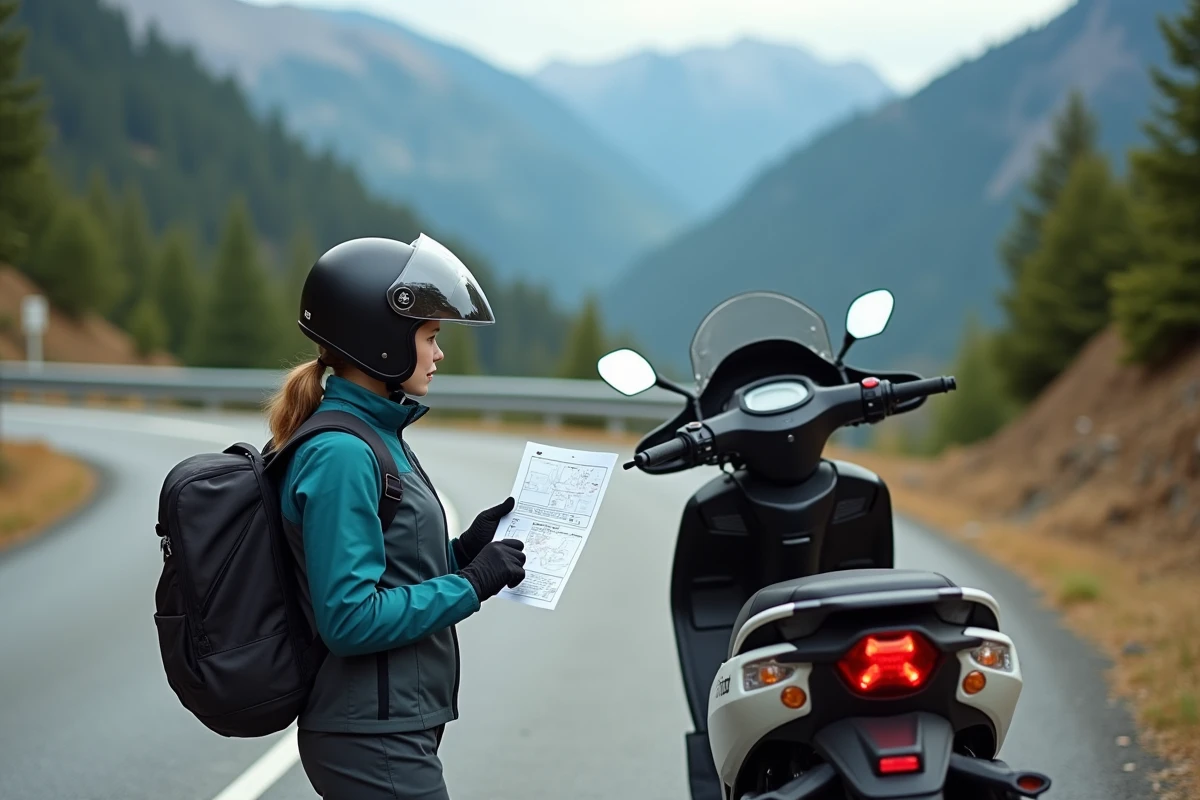
Concrete checks at the dealership before signing
No technical sheet can replace a test in real conditions. Here are the points to check on-site:
- Sit on the scooter with your usual gear (jacket, boots). The soles of your motorcycle shoes change the game by several millimeters compared to sneakers.
- Check that you can place both feet flat simultaneously without twisting your pelvis. A single flat foot is not enough for an emergency stop or a parking maneuver on a slope.
- Roll the scooter at walking pace in the dealership parking lot while turning the handlebars to the stops. This is when the weight is most felt, and you will know if the machine is manageable.
- Ask the seller for the list of approved lowering accessories available for the model and their impact on the final seat height.
A static test alone is misleading: a scooter may seem accessible when stopped and become cumbersome as soon as it needs to be moved by hand in an underground parking lot.
Euro 5 standards and the weight of maxi scooters: a changing parameter
The Euro 5 anti-pollution standards, and the upcoming developments towards Euro 5+, have pushed manufacturers to rethink their engine platforms. To compensate for the constraints of the catalyst and injection, some have lightened the chassis with lighter materials or optimized weight distribution.
This phenomenon has a direct impact on smaller riders. A recent maxi scooter can weigh less than a model from the previous generation with the same engine size. Maneuverability at low speeds is improved, which reduces physical effort in daily use.
Comparing a 2020 model with its 2025-2026 equivalent on the scale sometimes yields pleasant surprises. Choosing a recent vintage is justified not only by the onboard electronics but also by a tangible gain in lightness at the handlebars.
The size of the rider is not a fatality when it comes to maxi scooters. Between factory lowering kits, weight reductions related to Euro 5 standards, and the diversity of seat shapes, options have multiplied. The most reliable step remains the test at the dealership, gear on your back, in conditions closest to your daily use.