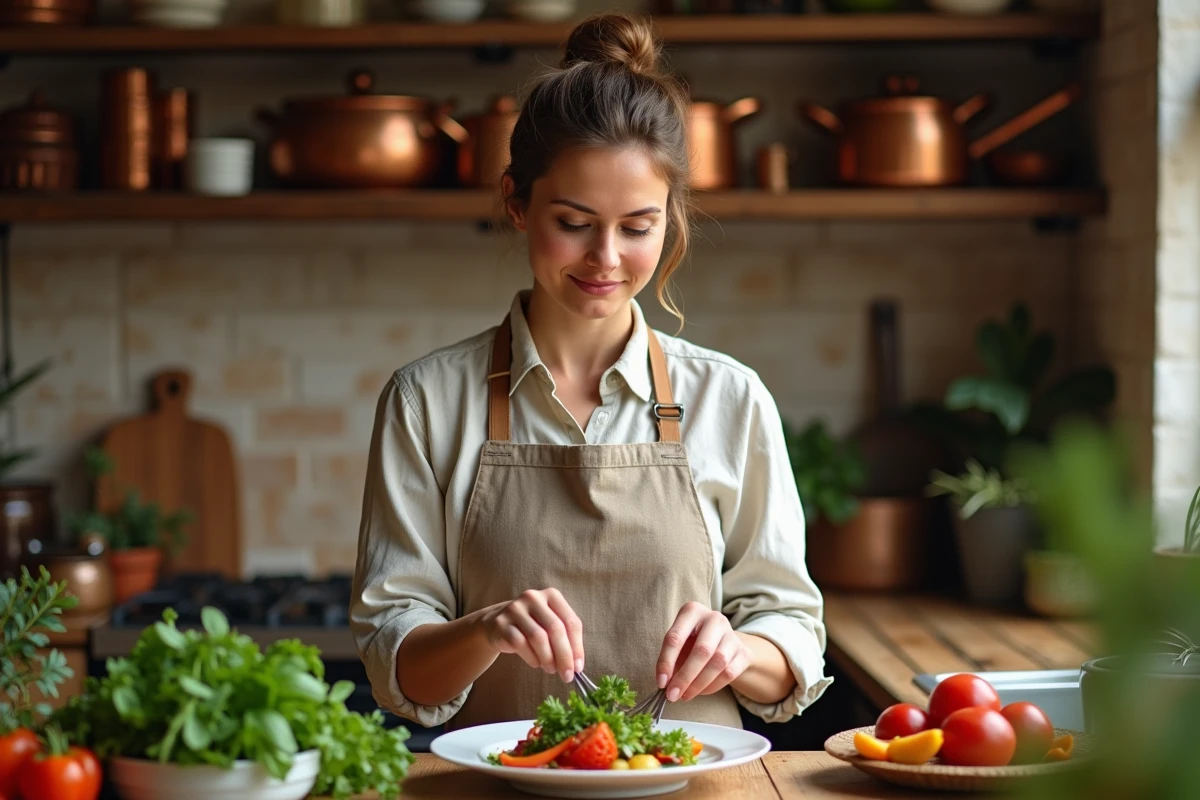
Gastronomy engages much more than just the palate. Each dish simultaneously activates sight, smell, touch, hearing, and taste, but most daily meals only tap into a fraction of this sensory potential. Understanding which levers truly amplify flavor perception can transform an ordinary meal into a memorable culinary experience.
Sensory channels activated by a meal: what each sense contributes to flavor perception
Research in neurogastronomy shows that the taste perceived in the mouth represents only a part of the information processed by the brain during a meal. Retronasal smell, texture in the mouth, color on the plate, and even ambient sound alter how we evaluate a dish.
| Sense | Role in dish perception | Concrete culinary lever |
|---|---|---|
| Sight | Creates anticipation and influences flavor estimation before the first bite | Color contrast, height of plating |
| Smell | Responsible for the majority of perceived aromatic nuances | Fresh herbs added at the last moment, roasted spices |
| Touch (texture) | Provides depth: melting, crunchy, creamy | Hot/cold alternation, playing with consistencies |
| Hearing | Enhances the sensation of freshness or crunchiness | Crackers, vegetable chips, crusted cooking |
| Taste | Detects the five basic tastes (sweet, salty, sour, bitter, umami) | Balancing seasonings, dosing umami |
This table illustrates a point that classic recipes often underestimate: focusing on just one sense limits the perceived richness of the dish. Chefs who leave a mark in memory are those who orchestrate multiple channels at once.
Resources like Goûts et Passions document this approach by combining fine grocery products, wines, and regional ingredients to create pairings that engage multiple senses at once.
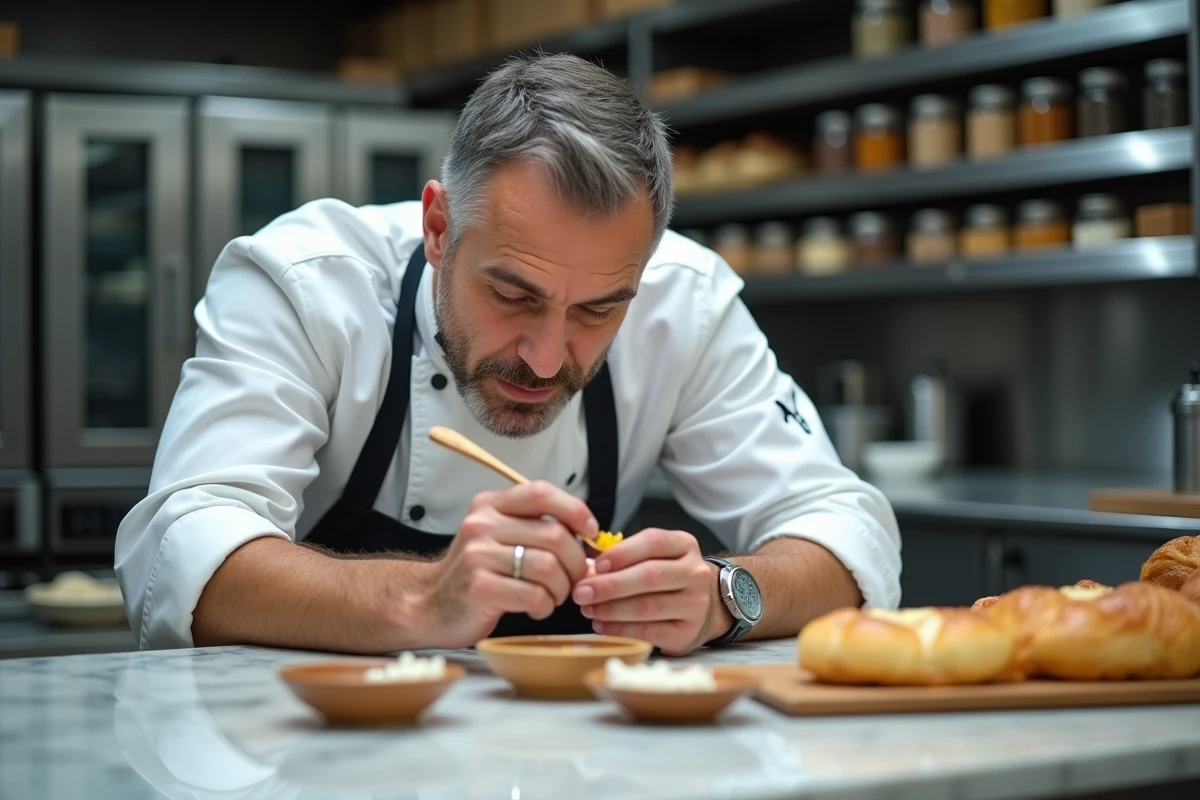
Digital multi-sensory experience in the kitchen: recent devices and observed results
In recent years, restaurants and “dining experience” venues have integrated digital devices to synchronize image, sound, and smell with the served dish. Video mapping projected onto the plate, audio headsets broadcasting calibrated atmospheres, and scent diffusers in the dining room are part of the arsenal used.
The Laboratory of Neurosemiotics of Food at the University of Florence and the Culinary Institute of America describe this trend as a growing movement in high gastronomy. The goal is not mere spectacle: sensory synchronization amplifies flavor perception measured in diners.
What works and what is just a gadget
A background sound evoking the sea, played during the tasting of a seafood dish, alters the perception of freshness and salinity. In contrast, a screen projecting images with no direct link to the dish’s ingredients produces no measurable effect on perceived taste.
The difference lies in the coherence between the sensory stimulus and the content of the plate. A forest scent diffused with a dish of dried mushrooms enhances the experience. The same scent on a chocolate dessert creates dissonance.
- Video mapping works when it reproduces the original environment of the ingredient (coastal, forest, wine region)
- Scent diffusers in the dining room must be calibrated to fade before the bite, so as not to compete with the dish’s aroma
- Ambient audio primarily affects dishes where texture plays a central role (crunchy, fizzy, crispy)
Therapeutic gastronomy: retraining the senses through cooking
Hospitals and rehabilitation centers in France and Canada have established culinary workshops for patients suffering from loss of smell or taste in recent years. These programs, developed particularly after the wave of post-Covid cases, systematically work on sight, touch, hearing, and spices to retrain the brain to perceive flavors.
The approach is based on a simple principle: when one sensory channel is impaired, the others partially compensate. A patient who can no longer smell anything can regain pleasure in eating by focusing on contrasting textures, temperatures, and bright colors on their plate.
Typical protocol of a sensory retraining workshop
The sessions follow a progression. They start with tactile recognition exercises (blindfolded, identifying an ingredient by its texture), then move on to olfactory associations with spices of increasing intensity. The final step involves preparing a complete dish while consciously engaging each sense.
This protocol is not reserved for patients. Any amateur cook who takes the time to feel their ingredients before cutting them, listen to the sizzle of a pan to adjust cooking, or touch dough to assess its hydration, cooks with a precision that timers and thermometers alone cannot provide.
Culinary training and creation of sensory experience: what has changed recently
Since the reform of several CAP and BP cooking standards in 2023-2024, modules dedicated to creating a holistic sensory experience have been integrated into some programs. These modules cover work on sounds in the dining room, light scenography, and consideration of textures through touch.
This shift marks a break from traditional culinary education, which focused on technical mastery (cutting, cooking, sauces). The expected competence of a young chef now includes the scenography of the meal, not just the execution of the dish.
Culinary management schools have followed suit by adding courses on the art of the table as a lever for customer experience. The choice of wine, selection of local products, room lighting, and service rhythm all contribute to awakening the senses of the diner.
A meal that engages all the senses does not necessarily require a starred restaurant budget or sophisticated digital devices. It often suffices to vary textures on the same plate, choose ingredients whose aromas are released at different moments during tasting, and pay attention to what one sees and hears as much as to what one tastes.