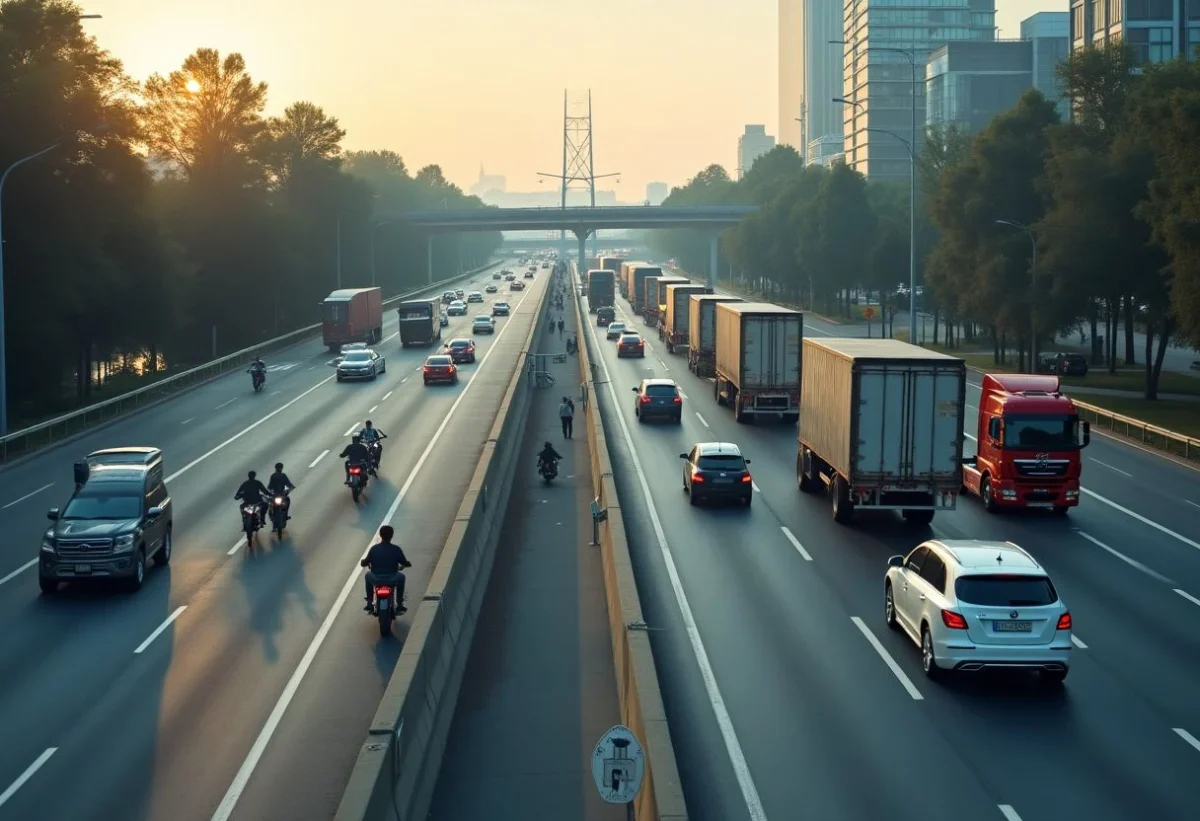
Transport to England has always represented a strategic issue for trade between the European continent and the United Kingdom. Since Brexit, the landscape of cross-Channel transport has evolved significantly, generating new challenges but also opportunities for industry players. Maritime carriers, road freight operators, and port managers now navigate a changing context shaped by redefined regulations and increased sustainability expectations. Brexit has altered trade relations, creating both complexity and new avenues for logistical innovation.
The historical context: a century-old crossing
Exploring transport between the continent and England requires understanding its historical context. This vital passage has shaped trade and cultural relations for centuries.
Since Roman times, the English Channel has served as a bridge between the British Isles and the European continent. The first trading ships navigated these waters, creating maritime routes that have persisted to this day. During the Middle Ages, the exchange of wool and wine between France and England became common, establishing a trade network that thrived under various dynasties and regimes. The industrial revolution saw the advent of steamships, increasing the capacity and speed of maritime transport. In the 20th century, ferries and the Channel Tunnel transformed the transport landscape, making travel more frequent and accessible.
The consequences of Brexit on transport
Brexit imposed a break in the existing operational framework for cross-Channel transport, necessitating a reevaluation of business practices.
- Strengthened customs regulations: The new customs rules have made import and export processes more complex, requiring more rigorous documentation and longer delays at border crossings.
- Impact on costs: Transport costs have increased due to additional fees related to customs clearance and the need to comply with new regulations.
- Logistical changes: Carriers have had to adapt their routes to optimize transit times and minimize disruptions.
- Opportunities for innovation: Some players have taken advantage of this situation to develop innovative logistical solutions, particularly in tracking technology and inventory management.
Modes of transport: a diversity of options
The crossing to England offers a variety of transport means, each contributing to the fluidity of trade exchanges.
Maritime transport remains a major option, with ferries and cargo ships making up the bulk of cross-Channel traffic. Ports such as Dover and Calais play a crucial role in facilitating these exchanges.
Meanwhile, the Channel Tunnel represents an essential alternative for road and rail transport, offering unmatched speed for certain types of goods.
The transporteur angleterre also offers multimodal solutions, combining maritime and road transport to optimize delivery times. This diversification of transport modes allows for logistical choices to be tailored to the specific needs of the goods.
Future perspectives: towards sustainable logistics
The transport sector between Europe and the United Kingdom is turning towards more sustainable and technologically advanced practices.
In response to growing environmental concerns, many companies are investing in green technologies. The development of alternative fuels for ships and trucks, as well as route optimization to reduce carbon footprints, are at the heart of many carriers’ strategies.
Digital innovations, such as the Internet of Things (IoT) and artificial intelligence (AI), are beginning to transform cargo tracking and management, thereby increasing operational efficiency and customer satisfaction.
Government support and tax incentives for adopting sustainable practices also encourage companies to invest in eco-friendly solutions, enhancing the appeal of cross-Channel transport for decades to come.