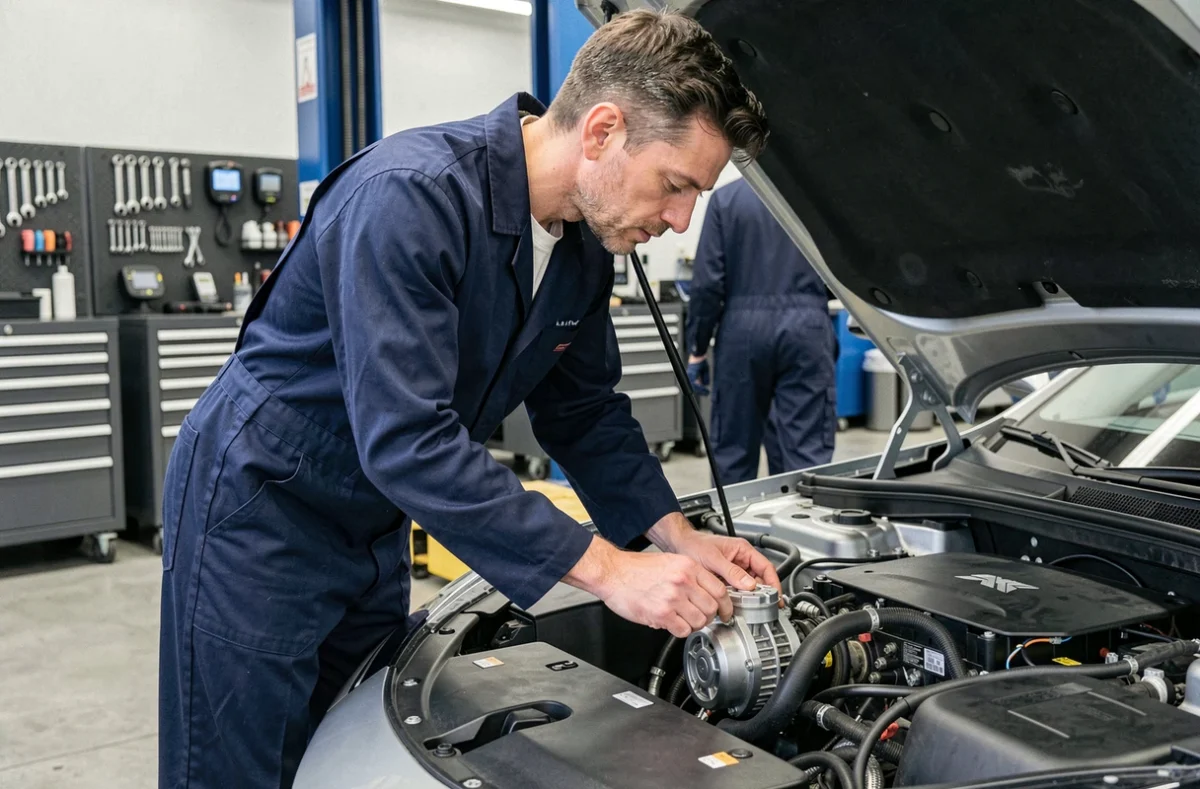
Mechanical workshops are increasingly different from those of ten years ago. Between sensors that monitor the wear of a bearing in real-time and European regulations redefining the responsibility of integrators, the sector is undergoing a profound technical and legal transformation. Understanding these changes means anticipating what the daily life of mechanical professionals will be like in the coming years.
Machine Regulation 2023/1230: What Changes in the Workshop
Have you heard of the Machinery Directive? It has governed the market introduction of industrial equipment for years. A new text replaces it: Regulation (EU) 2023/1230, applicable from January 20, 2027.
The difference is not just administrative. This regulation introduces requirements on topics that the previous directive ignored: autonomous machines, software with evolving behavior, and the cybersecurity of safety functions. In short, a connected machine tool must prove that its software updates do not compromise operator safety.
One point deserves special attention. Anyone who makes a substantial modification to an existing machine, including through digital means, can be reclassified as a manufacturer. This provision directly affects maintenance teams that modernize equipment by adding sensors or reprogramming controllers. A technician who updates a numerical control system potentially engages their company’s liability just like an original manufacturer.
For workshops that regularly integrate new components into old machines, it becomes necessary to document each intervention and assess whether it constitutes a substantial modification under the regulation. This is a change in culture as much as in procedure.
Cybersecurity of Mechanical Equipment: Two European Frameworks to Know
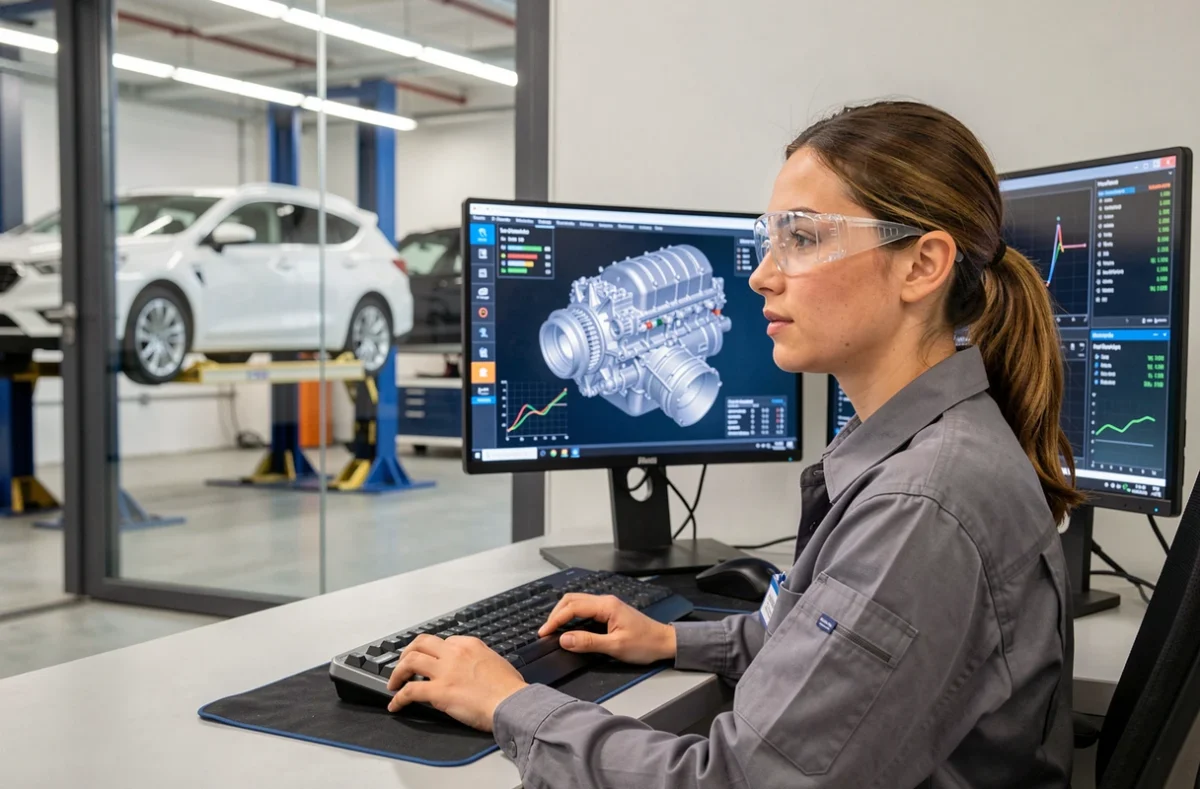
Why talk about cybersecurity in an article about mechanics? Because a network-connected CNC milling machine is, from a regulatory standpoint, a product that includes digital elements. Therefore, it falls under two distinct texts.
The Machinery Regulation covers physical safety: malware should not be able to disable an emergency stop. The Cyber Resilience Act (CRA) covers digital security in a broad sense: protection against intrusions, vulnerability management, security updates. Both frameworks can apply simultaneously to the same connected machine.
In practice, this means that manufacturers of mechanical equipment will need to provide proof of compliance on two fronts. For an integrator assembling a production line from components from different suppliers, the question quickly becomes complex: who is responsible for the cybersecurity of the whole? Professionals who wish to discover mechanical news on Actu Mécanique will find regular analyses on these regulatory developments.
Predictive Maintenance and Digital Twins in Industrial Mechanics
Predictive maintenance is based on a simple principle. Instead of replacing a part according to a fixed schedule (every 500 hours, for example), sensors continuously measure the actual state of the part: vibrations, temperature, noise. An algorithm analyzes this data and signals the appropriate time to intervene.
The gain is twofold. Unexpected downtimes, which are costly in lost production, are avoided. And parts that are still functional are no longer replaced, reducing spare parts and labor costs.
The Digital Twin as a Simulation Tool
The digital twin takes the logic further. It is a virtual replica of a machine or production line, powered in real-time by sensor data. One can simulate the effect of a parameter change (cutting speed, pressure, pace) without touching the physical machine.
For a machining workshop, this allows testing a new program before launching production. Errors are corrected on the virtual model, not on the real part. The cost of scrap decreases, and the tuning time is also reduced.
- Vibrational sensors detect the wear of a cutting tool before it produces out-of-tolerance parts, avoiding entire batches needing recycling.
- Thermal data allows adjusting lubrication parameters based on actual load, extending the lifespan of spindles.
- Simulation on a digital twin reduces the number of physical trials when launching a new series, a direct advantage for diversified small series.
Materials and Manufacturing Processes: What Digital Metallurgy Changes
The report “Priority Technologies in Mechanics 2030,” coordinated by Cetim and Mecallians, identifies digital metallurgy among the technologies to watch. The idea is to simulate the behavior of an alloy before even casting it, by modeling its microstructure at the atomic scale.
In practical terms, a design office can virtually test the fatigue resistance of a new steel under specific temperature and stress conditions. This approach accelerates the development of materials suited for specific uses, such as green steels produced with a reduced carbon footprint.
Metal Additive Manufacturing and New Skills
Additive manufacturing (3D metal printing) does not replace traditional machining, but complements it in specific niches. Parts with complex geometries, impossible to achieve through conventional milling, become manufacturable in a single operation. The aerospace and medical sectors are already using these processes for custom components.
For mechanics, this implies new skills:
- Knowing how to read and adapt a design file for 3D metal printing, taking into account the thermal constraints specific to the process.
- Mastering post-printing treatments (finishing machining, heat treatment) that remain necessary to achieve the required tolerances.
- Understanding the mechanical properties of printed parts, which differ from those obtained by casting or forging.
The mechanical sector is not only transforming through its machines but also through the legal and digital framework surrounding them. Regulatory compliance is becoming a technical skill in its own right, on par with programming a machining center. Professionals who integrate these dimensions, from cybersecurity to digital metallurgy, will be those who benefit from innovations rather than suffer from them.