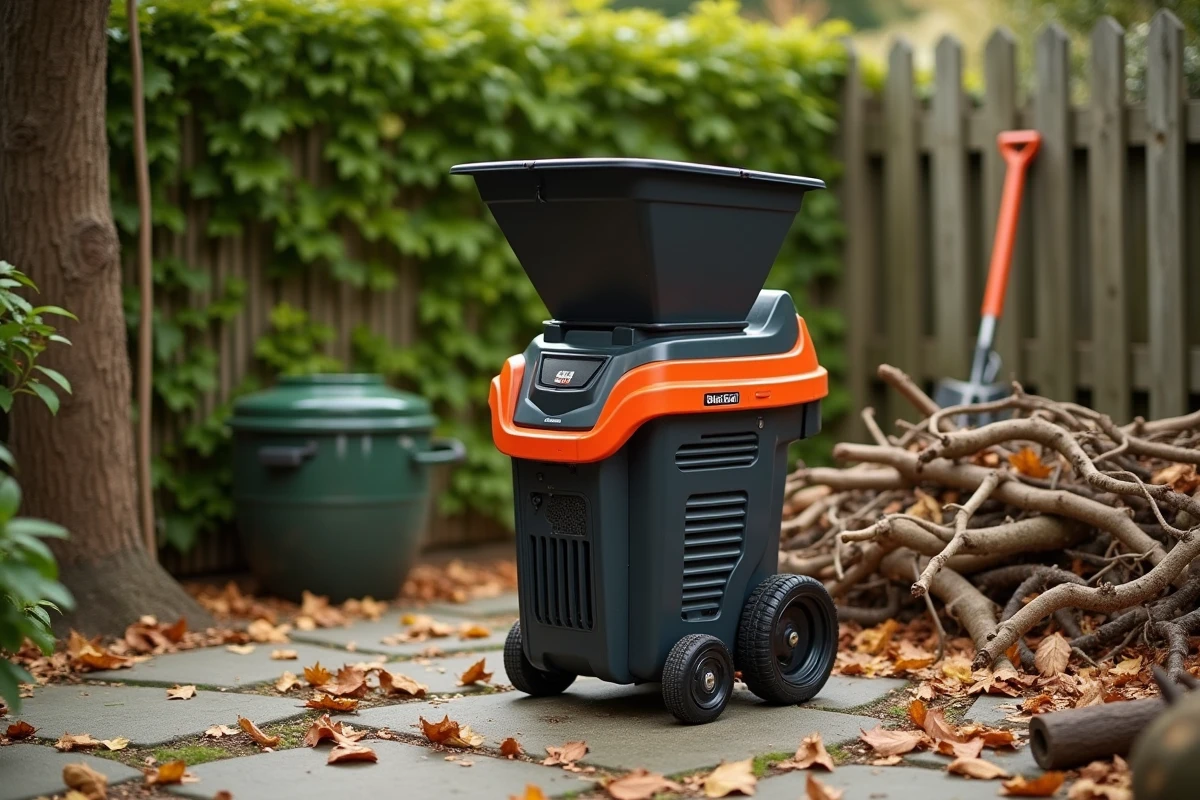
The Denqbar 5100W features a 4-stroke thermal engine with 7 HP, placing it in a category where few shredders accessible to individuals dare to venture. With a double-blade rotor capable of handling branches up to 76 mm in diameter and two distinct feeding zones, the machine clearly targets gardens with a high volume of green waste. It remains to be seen whether this technical specification lives up to its promises in practice.
E10 Fuel Compatibility and Denqbar Engine Reliability
The widespread use of E10 gasoline in Europe has changed the maintenance requirements for thermal shredders. Denqbar specifies in its manual the recommended use of E5 or E10, along with storage precautions that most tests overlook.
E10 contains a proportion of ethanol that promotes the formation of gums in the carburetor when the fuel stagnates for several weeks. For a shredder used seasonally (spring pruning, autumn cleaning), the fuel can remain in the tank for two to three months. Without draining or adding a stabilizer, the risk of difficult starting significantly increases.
We recommend prioritizing E5 if your station still offers it, or systematically draining the circuit before any period of inactivity exceeding four weeks. This point affects the longevity of the engine far more than the advertised raw power.
For those still hesitating about this model, we have written our review of the Denqbar shredder with detailed feedback on its performance in real conditions.

Double Feeding Zone: Real Interest for Plant Shredding
The Denqbar 5100W has two distinct input hoppers. The first, narrower, channels fine branches, foliage, and hedge trimmings. The second accepts larger diameter branches. This is not a gimmick: separating the flows significantly reduces jams.
On a single-entry shredder, mixing soft twigs and rigid branches causes entanglements at the rotor level. The motor struggles, the blade slips, and the user must cut the power to manually clear the blockage. With the Denqbar system, each type of plant takes an optimized path for its size.
Fine Shredding and Mulching Value
The double-blade rotor produces particularly fine shredding compared to thermal shredders of comparable power. This level of fragmentation makes the result directly usable for mulching without an intermediate composting step.
However, the absence of a collection bin requires planning for a tarp or container under the discharge chute. In an intensive shredding operation, the lack of a bin is the main ergonomic flaw of this model.
Denqbar Spare Parts and Customer Service: An Underestimated Criterion
A thermal engine of this power endures heavy mechanical stresses. Blades, belts, air filters, spark plugs: these consumables wear out and need to be replaced regularly. The question of customer service and the availability of parts determines the actual lifespan of the device.
Denqbar announces availability of spare parts for several years through its online shop and by phone. This is a commitment that few entry- and mid-range thermal shredder brands explicitly make. It reduces the risk of premature obsolescence and justifies the long-term investment.
- The rotor blades can be ordered directly from the Denqbar site, without going through a third-party dealer.
- The air filter and spark plug follow standard formats, allowing for replacement with generic parts if needed.
- Customer service is reachable by phone, a valuable point when identifying a part reference on a thermal engine.

Denqbar Thermal Shredder vs Electric Shredder: Which Type of Garden?
The thermal option is justified from a regular and substantial shredding volume. A modest-sized garden with a few shrubs and a short hedge does not require 7 HP. A good-quality electric shredder will suffice, with less noise and no fuel constraints.
The Denqbar 5100W makes the most sense in three scenarios:
- Areas far from any electrical outlet, where the extension cord becomes a safety and practicality issue.
- Large volumes of branches with a diameter greater than 40 mm, which electric shredders struggle to process without jamming.
- Shared use among neighbors or in a semi-professional context, where the shredding rate needs to remain high for several hours.
The noise level of a thermal engine of this power remains high. In a dense residential area, the allowed time slots for this type of device limit usage flexibility. This is a factor to consider before purchase.
Routine Maintenance: What the 4-Stroke Engine Requires
Unlike an electric shredder that only requires periodic sharpening of the blades, the Denqbar 5100W demands engine maintenance: oil changes, air filter replacement, spark plug checks, carburetor cleaning. Expect a complete maintenance every 50 hours of use approximately.
These operations remain accessible to a DIY user, but they represent a cost and time that the buyer of an electric shredder will never have to plan for.
The Denqbar 5100W is a machine designed for large garden projects. Its shredding power and double feeding system place it above most thermal shredders in its category. The availability of spare parts over time reinforces this position. Provided one accepts the specific constraints of thermal devices (noise, maintenance, fuel), it is a tool that will fulfill its role for many seasons.