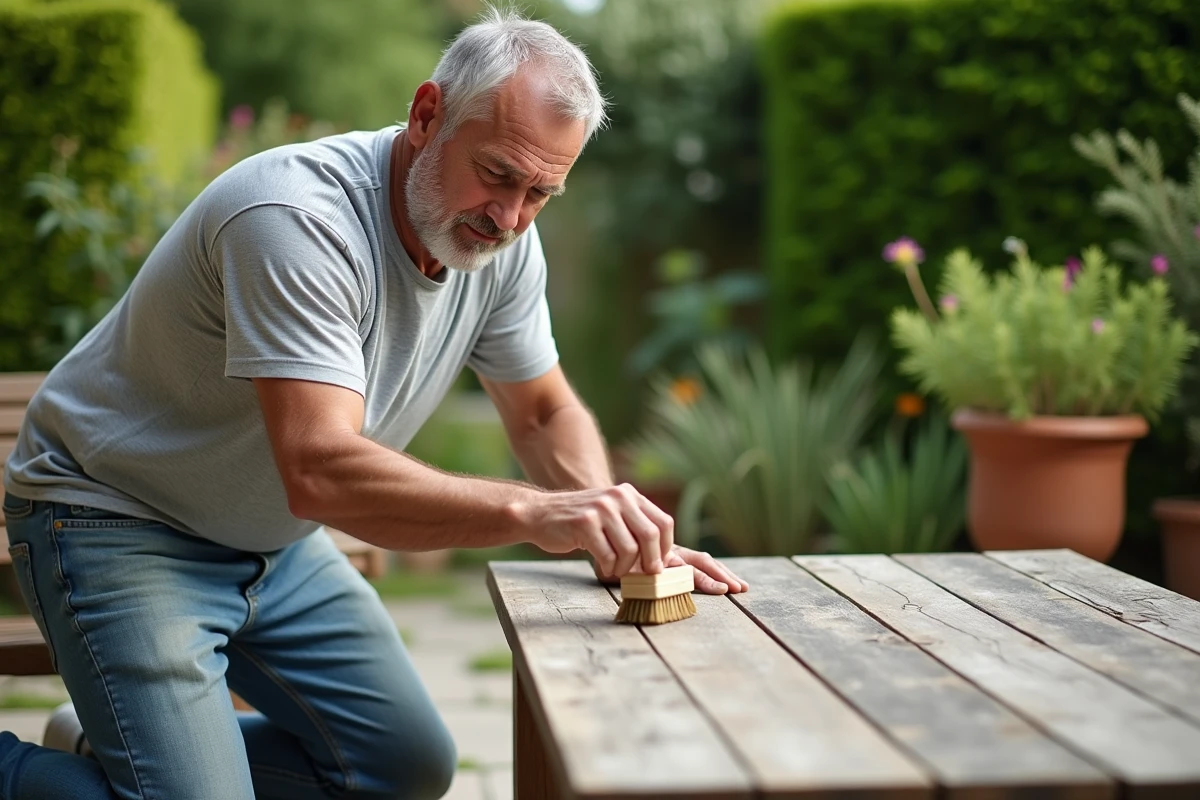
The graying of outdoor wood results from the degradation of lignin due to the combined effects of UV rays and moisture. A wood brightener acts chemically on this altered layer to restore the original color, but its effectiveness directly depends on the type of wood treated and the products previously applied. Applying the same formula on a pressure-treated pine bench and on a teak table oiled for ten years produces very different results, even damage.
Wood Brightener and Type of Wood: Why a One-Size-Fits-All Recipe Doesn’t Work
Softwoods (pine, spruce, Douglas fir) and dense exotic woods (teak, ipe, cumaru) do not react the same way to a wood brightener. On a softwood, the fibers are open and quickly absorb the product. The main risk is overexposure: letting it act too long can cause excessive lightening and weaken the surface.
On a dense exotic wood, the problem is the opposite. The compactness of the fibers hinders the penetration of the brightener. If the furniture has already received several layers of oil over the years, these greasy residues form an additional barrier.
In this case, a wood brightener alone is not enough to properly prepare the surface. Recent advice emphasizes the combination of a brightener with a de-oiler or degreasing cleaner for exotic woods: without this step, natural oils prevent the penetration of finishes and cause shiny or sticky areas.
Before choosing a product, it is essential to identify two things: the type of wood and its treatment history. A piece of furniture never treated since purchase requires a different protocol than a piece oiled every spring for five years. To better understand how to restore and protect outdoor wood with a brightener, this distinction between species and past treatments is the starting point.
Oxalic Acid, Peroxide, or Soda: Choosing the Right Active Ingredient for Your Wood Brightener
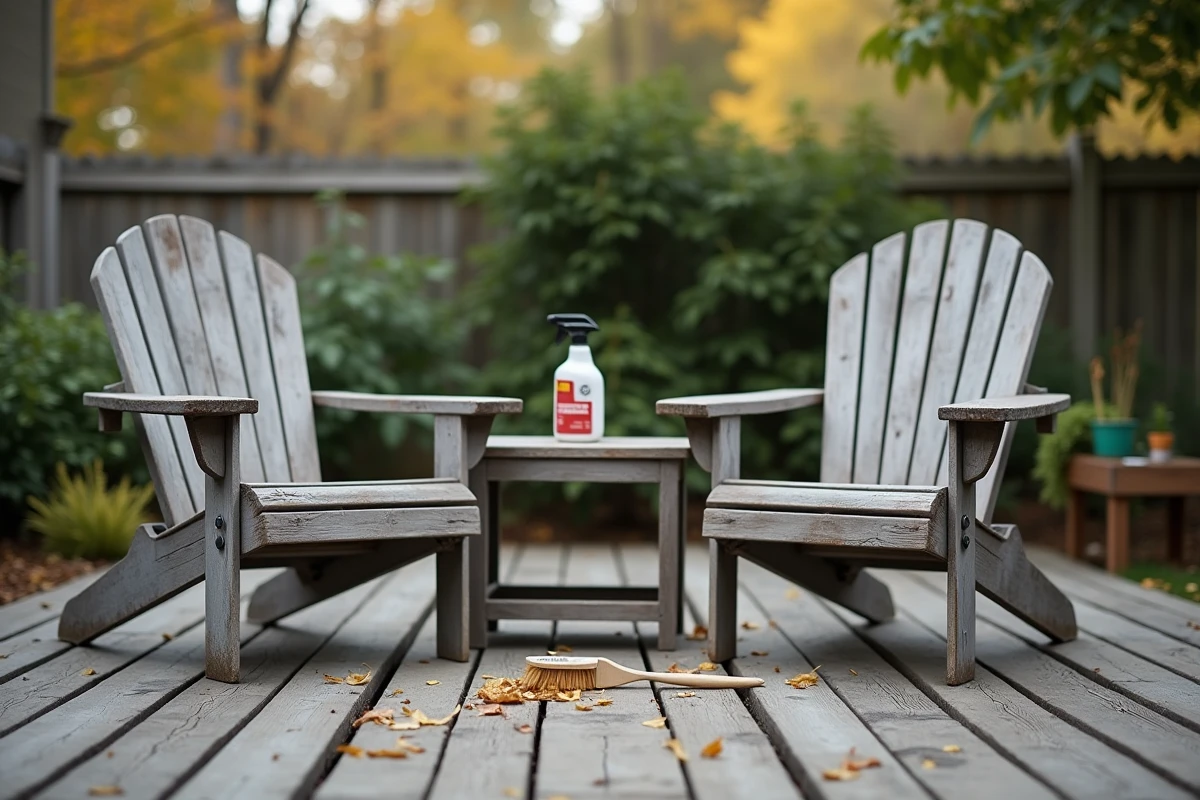
Commercial brighteners rely on a few active ingredients whose properties vary significantly.
- Oxalic acid (or sorrel salt) is the most common. It lightens gray wood by dissolving oxidized tannins. Effective on softwoods and European hardwoods (oak, acacia), it remains gentle compared to alternatives. Recent formulations based on oxalic acid are available in biodegradable and less corrosive versions, specifically suited for garden furniture.
- Hydrogen peroxide (concentrated oxygenated water) acts by oxidation. It is suitable for light graying and light woods but can bleach naturally dark woods beyond the desired result.
- Brighteners based on caustic soda are the most aggressive. They strip as much as they brighten. On garden furniture with sometimes fragile joints, this type of product can damage glues and deeply dry out the fibers. Their use is more justified on thick surfaces like terraces.
The revision of the CLP regulation (EU) of 2023 now requires enhanced labeling on safety data sheets: wearing gloves and goggles is mandatory during application, regardless of the active ingredient. Reading the product’s SDS before use remains the basic precaution.
Neutralization After Brightening: The Step Many Skip
A brightener alters the pH of the wood surface. Leaving an acidic or alkaline residue on the fibers compromises the adhesion of the finish applied afterward. Rinsing with clear water does not constitute neutralization.
On wood treated with oxalic acid, a pass with a slightly alkaline solution (diluted baking soda, for example) brings the pH back to a neutral level. On wood treated with an alkaline product (soda), it’s the opposite: a slightly acidified rinse stabilizes the surface.
The test is simple: if the dried surface shows whitish marks or a powdery feel, the neutralization is incomplete. Repeat the rinsing and allow to dry completely before any finishing, ideally for at least one day in dry conditions.
Adjusting Drying Time to the Climate
Wood rinsed in humid or cool weather takes much longer to dry than in the middle of summer. Applying oil or a saturator on still damp fibers traps water under the protective layer and promotes mold growth. It’s better to wait an extra day than to treat too early.
Oil, Saturator, or Stain: What Finish After Brightening Garden Furniture
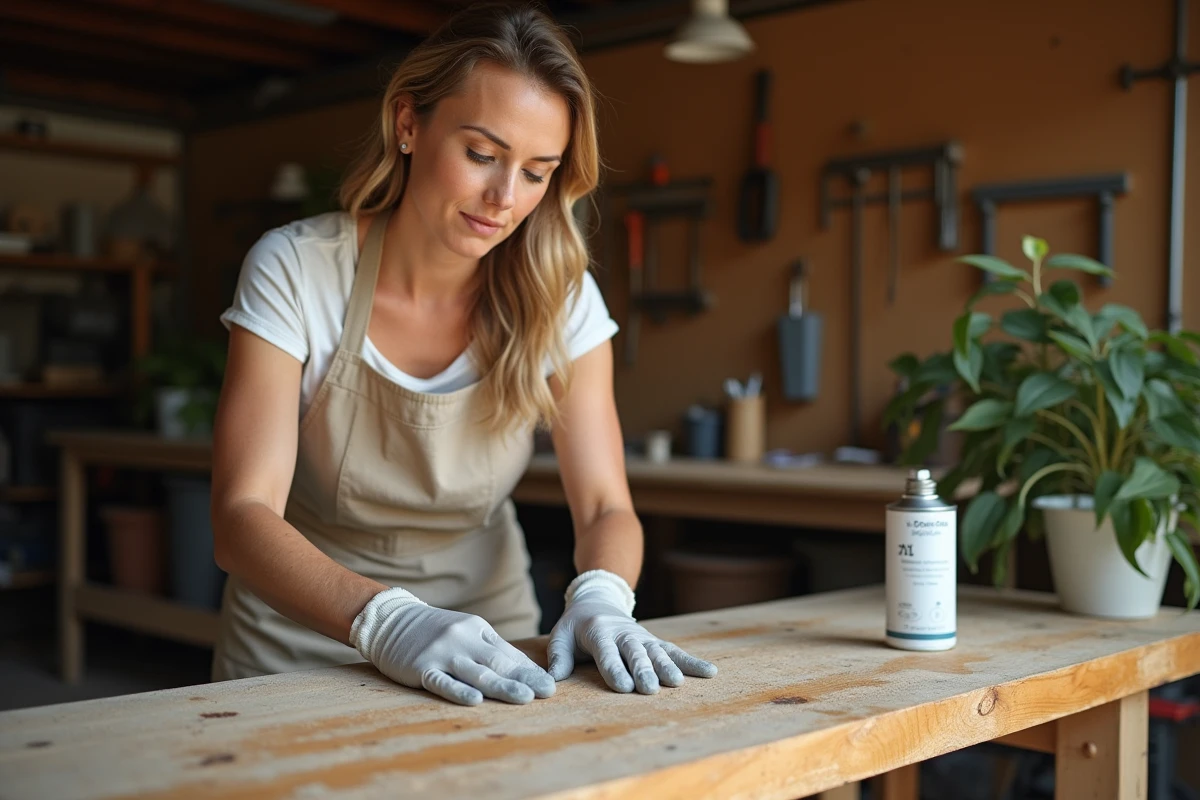
The brightener restores color, but it does not protect. Without a finish, graying returns within weeks. The choice of protection once again depends on the species and use.
- Teak oil (or oil for exotic woods) penetrates dense fibers and nourishes the wood deeply. It does not form a surface film, which prevents peeling. On a teak garden set, this is the most suitable finish.
- The wood saturator works on a principle similar to oil but contains more concentrated anti-UV and hydrophobic agents. On moderately dense woods (treated pine, Douglas fir), it offers more durable protection than regular oil. It does not create a film, so no stripping is necessary when renewing.
- The stain forms a semi-transparent film. It effectively protects against UV and moisture, but it peels over time on frequently handled furniture (chairs, armchairs). Its use is more relevant on fixed elements like screens or pergolas.
On furniture previously treated with oil, sticking to a compatible oil ensures good penetration. Applying a stain on previously oiled wood often leads to poor adhesion, with areas peeling after a few months of exposure.
Maintenance Frequency According to Exposure
A garden set sheltered under a pergola requires less frequent finishing than furniture exposed to full sun all day. Observing the surface at the beginning of spring gives a good indication: if water no longer beads on the wood, the protective layer is exhausted and new maintenance is required.
The complete protocol (brightener, neutralization, drying, finishing) does not need to be repeated every year if the finish is renewed regularly. A brightening every two or three years, combined with an annual layer of oil or saturator, maintains the color and resistance of the furniture without damaging the fibers.