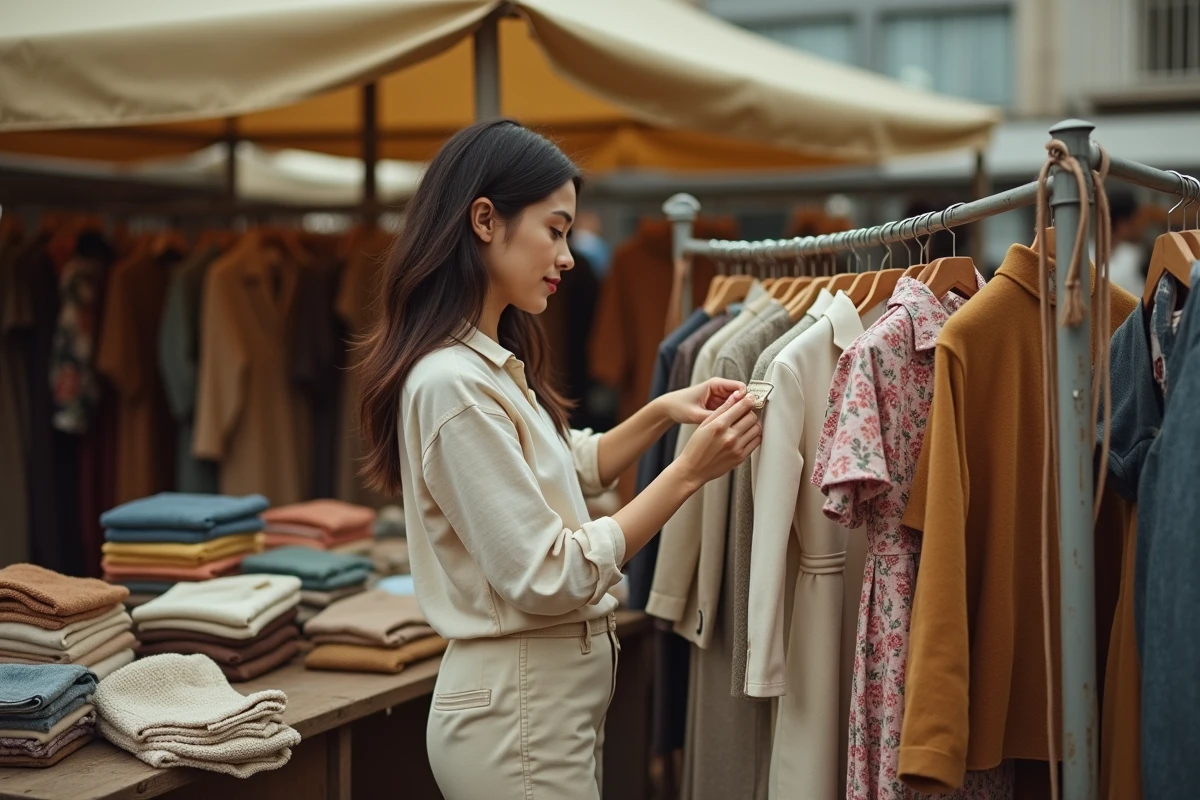
Building a vintage wardrobe requires answering a preliminary question: how much does a wardrobe made up of second-hand pieces actually cost, and especially, what causes the bill to vary from simple to tenfold? The price of a vintage garment depends less on its age than on the chosen purchasing channel, the brand, and the condition. Setting a realistic budget requires mapping these variables before starting to hunt for treasures.
Vintage prices according to the purchasing channel: thrift store, platform, or auction house
The factor that weighs most heavily in the budget is neither the decade of origin nor the type of clothing, but where you buy it. The differences between channels are significant enough that the same vintage Levi’s jeans can range from a handful of euros to several hundred depending on the point of sale.
| Purchasing Channel | Price Level | Typical Profile of Pieces |
|---|---|---|
| Charity thrift stores, garage sales | The lowest | Unsorted pieces, variable condition, possible finds |
| Platforms (Vinted, Depop, Etsy) | Intermediate to high | Pieces identified as sought after, prices adjusted to demand |
| Specialized auction houses | Collection/luxury segment | Iconic pieces, estimates aligned with the art market |
Charity thrift stores and garage sales remain the most economical option: pieces are sold several times cheaper than on online platforms. Sorting takes time, but the quality-price ratio rewards patience.
On platforms like Vinted or Depop, sellers know the value of what they offer. A workwear piece from the 60s-80s or a branded luxury bag displays prices significantly higher than those at a flea market stall. Therefore, making a budget estimate for a vintage wardrobe involves choosing the channel even before selecting the pieces.
Auction houses position vintage as a collection segment. Estimates follow the codes of the art or luxury market, not those of a daily clothing budget.
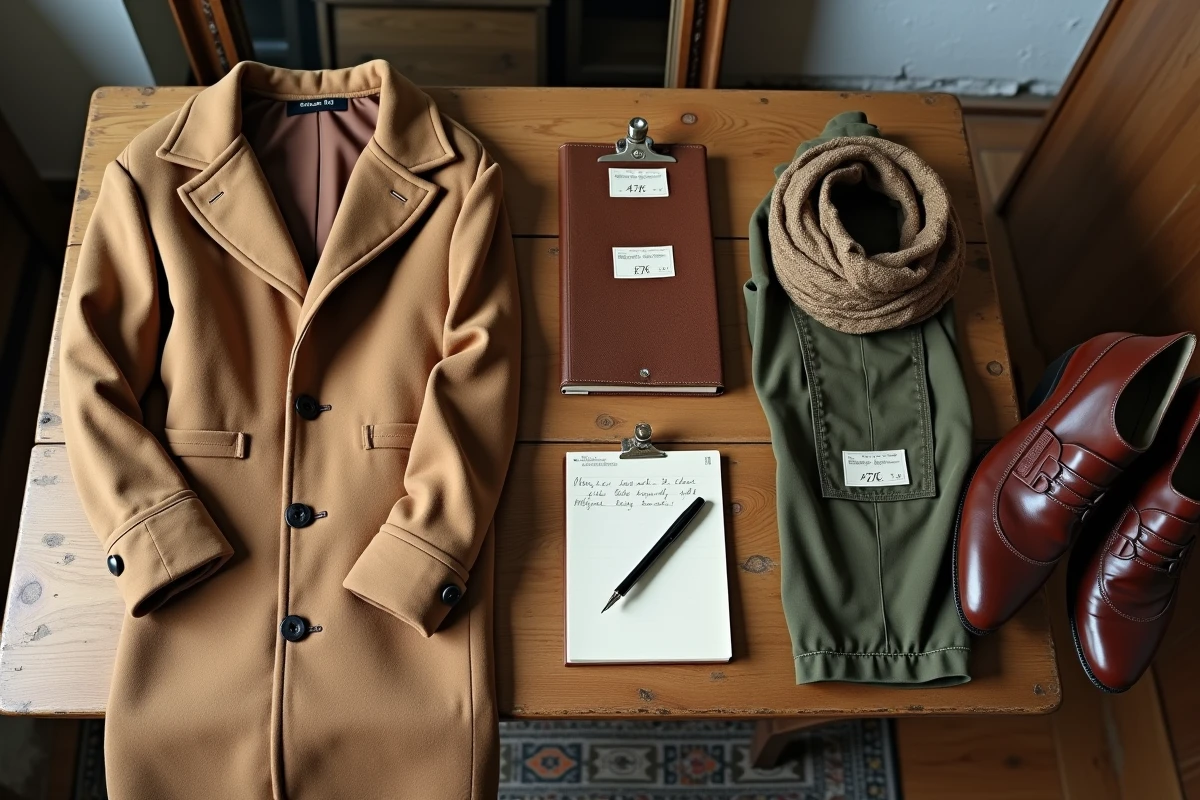
Everyday vintage wardrobe: budget items to balance
A functional vintage wardrobe is not built by randomly accumulating pieces. Two items concentrate the bulk of the expense: versatile basics and signature pieces.
Vintage basics and signature pieces
Basics (jeans, plain t-shirts, shirts, sweaters) represent the foundation of the wardrobe. In thrift stores, these pieces cost little individually. Accumulating about thirty basics through this channel remains accessible for a modest budget.
Signature pieces (a worn leather jacket, a designer dress, a structured coat) drive up the cost. One strong piece can represent half of the total budget. This is where the choice of purchasing channel produces the most spectacular difference.
Condition and hidden costs
A vintage garment bought at a low price but requiring alterations, professional cleaning, or zipper replacement can end up costing as much as a better-condition piece bought at a higher price. The budget must include these additional expenses:
- Alterations at a tailor (hems, size adjustments, button replacements): a often underestimated item that can quickly add up on a complete wardrobe
- Specialized cleaning for delicate textiles (silk, wool, leather): some vintage pieces cannot withstand regular washing
- Structural repairs (loose seams, damaged linings, broken zippers): common on pieces from the 60s to 80s
Planning a budget for alterations of about a quarter of the clothing budget helps avoid unpleasant surprises. This ratio remains a cautious estimate for a wardrobe primarily made up of thrifted pieces.
Effect of rising demand on vintage prices in France
Since 2022, the demand for branded vintage and iconic pieces has significantly increased. This trend has a direct effect on budgets: the prices of sought-after vintage are rising faster than those of entry-level new items.
Old Levi’s jeans, workwear from the 60s to 80s, and branded luxury bags account for most of this inflation. On online platforms, prices for these categories have adjusted upwards, sometimes markedly over two or three seasons.
At the same time, the CSR (corporate social responsibility) commitments of major fashion retailers are pushing new consumers toward second-hand items. This additional demand flow fuels the increase, particularly for pieces already identified as desirable by the search algorithms of the platforms.
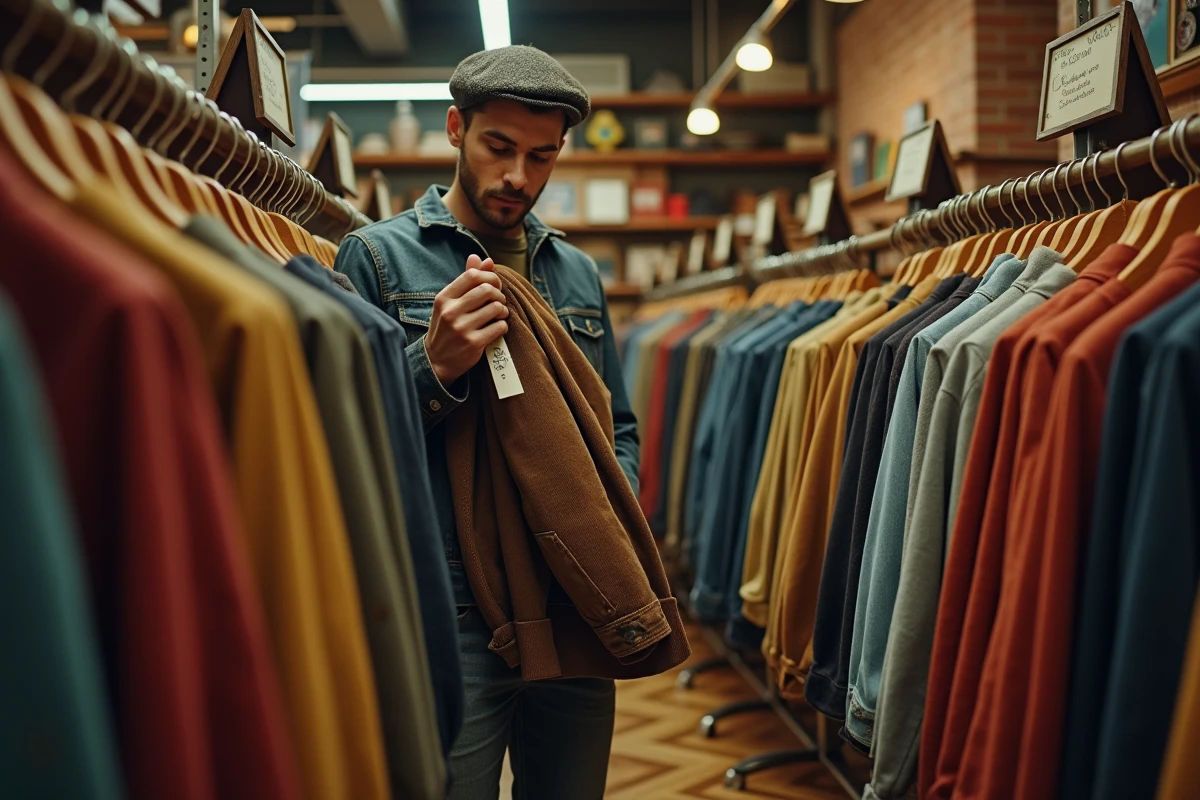
In contrast, the unbranded and unidentified segment (clothing without a known brand label, common textiles) remains largely spared from this inflation. It is in this niche that vintage retains its price advantage over new.
Vintage buying strategy: distributing the budget in tiers
Rather than setting a total amount, a tiered approach allows for controlling spending while building a coherent wardrobe.
The first tier involves establishing the foundation of basics in thrift stores or garage sales. This is the channel where the unit cost is the lowest, and where the quantity of available pieces allows for finding the right sizes without pressure.
The second tier targets intermediate pieces on online platforms: clothing from identified brands, in good condition, at negotiable prices. The alert feature on Vinted or Depop allows monitoring a specific item and buying at the right time.
The third tier, optional, concerns collection or luxury vintage pieces. This segment is more about investment than a regular clothing budget. Specialized auction houses offer a guarantee of authenticity, but prices align with a collectors’ market.
The actual budget for a vintage wardrobe therefore depends less on a fixed amount than on a balance between purchasing channels, condition of pieces, and the proportion of basics compared to signature pieces. Thrifting for basics and reserving platforms for targeted pieces remains the most effective combination for controlling spending without sacrificing the quality of the wardrobe.